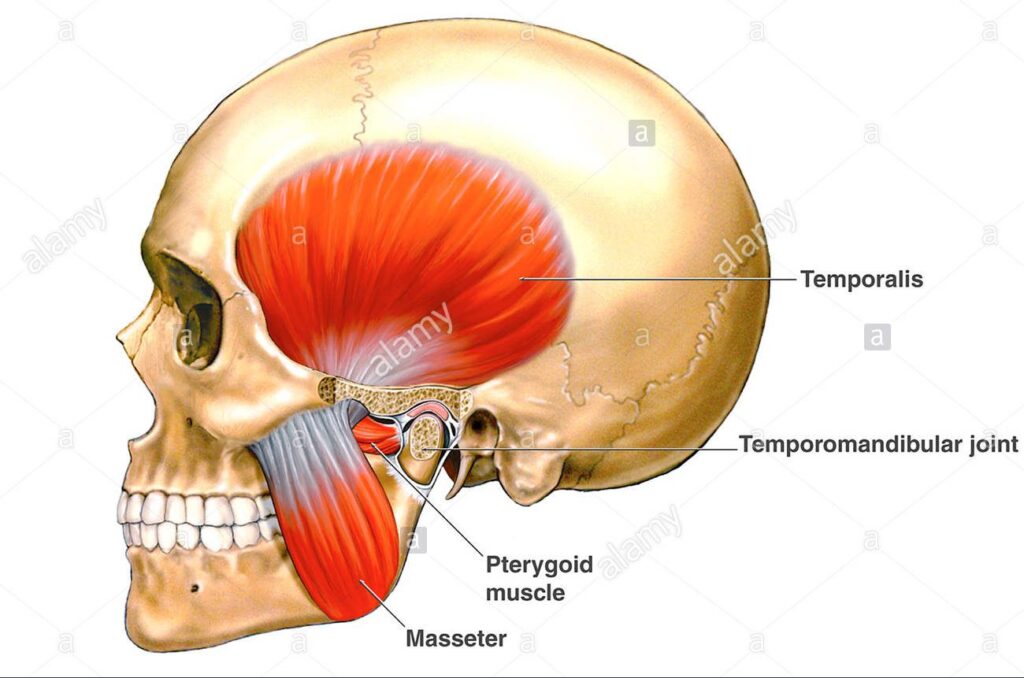
TMD, or temporomandibular disorder, is often referred to as TMJ syndrome. This term refers to any pain, discomfort, dysfunction, or tension related to the jaw. According to the American Academy of Craniofacial Pain, TMDs are a group of maladies that can affect the temporomandibular joints and the associated muscles of the jaw, face, and neck. It may also include related neurological and vascular structures.
The temporomandibular joint connects the mandible (lower jawbone) to the skull temporal bones in front of the ear. Within the joint formed by these two bones, there is a tiny disc of cartilage. The masseter and temporal muscles provide power to the joint, making it one of the most used joints in the body. The temporomandibular joint is very complex. It needs to move up and down, forward and back, and side to side to allow us to speak, chew, and yawn. It also has to be versatile enough to make the subtle movements required for speech as well as being able to open very wide and to generate enough force to deal with tough, hard to chew foods
The symptoms of a TMD can include:
The causes of temporomandibular disorders can be hard to pinpoint because a number of factors may be contributing. Anything that affects the functionality or structure of the temporomandibular joint can lead to dysfunction, pain, tension, and a wide range of other symptoms. These factors may be a combination of:
Many symptoms of TMJ disorders can respond well to home remedies such as:
When home remedies are not effective, medical treatment options may be necessary. These most common treatments include the following:
Myofunctional therapy can strengthen and retrain oral and facial muscles to treat oral myofunctional dysfunction. It can also correct dysfunctional swallowing and chewing patterns, restore nasal breathing, and get the tongue to rest in the correct place.
As this study from Brazil shows, myofunctional therapy can make a significant difference in the treatment of TMDs, helping to restore the temporomandibular joint to correct functionality and reduce pain. The study indicated improvements in pain levels, increased mandibular range of motion, and a reduction in related signs and symptoms.
The contributing factors involved can be so complex, managing and treating TMJ pain and other TMD symptoms often requires a skilled multi-disciplinary team. A good myofunctional therapist can also help find the right doctor, dentist, orthodontist, or bodyworker for patients with TMJ-related issues depending on their individual needs.