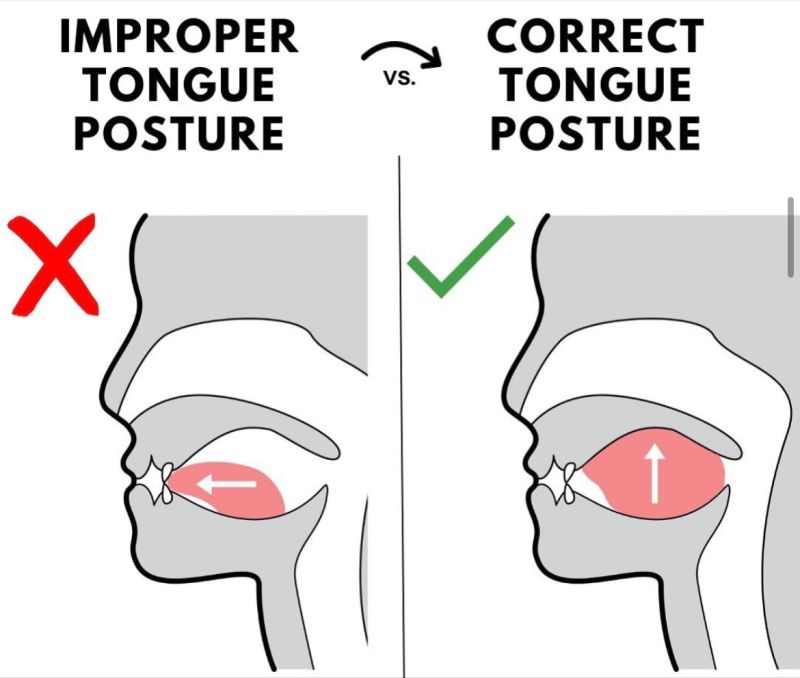
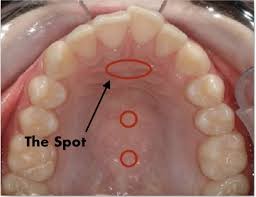
Proper tongue posture involves the placement and resting position of your tongue in your mouth. The ideal position for your tongue is pressed against the roof of your mouth rather than letting it rest in the bottom of your mouth or pressed against the back of your teeth. The tip of the tongue should rest on the incisive papilla, the bump of tissue behind the two front teeth on the hard palate. The “SPOT” is located just behind that bump, it can be found by making an /N/ sound. The tongue should contact the three points on the palate indicated on the picture below.
Tongue thrusting is a myofunctional disorder in which muscular imbalance leads to the tongue pressing too far forward in the mouth during speech, swallowing, and even when the tongue is at rest. It may also be called also called reverse swallowing or immature swallow. During a normal swallow, the tip of the tongue presses firmly against the roof of the mouth slightly behind the front teeth, the rest of the tongue is pulled up into the palate. The lips should be closed with the teeth slightly touching. There should be NO additional muscle movements or contractions from the chin or face.
It is estimated a person swallows a total of 1,200 to 2,000 times every 24 hours with about four pounds of pressure per swallow. This constant pressure of the tongue will force the teeth and arches out of alignment. Aside from the pressure exerted while swallowing, nervous thrusting also pushes the tongue against the teeth while it is at rest. This is an involuntary, subconscious habit that is difficult to correct.
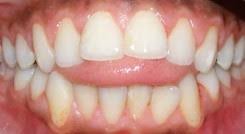
Incorrect tongue posture can often cause misalignment, crowded teeth, crossbite, and open bites. This problem may lead to difficulties in biting, chewing, swallowing, and TMJ dysfunction. These problems can also include snoring, sleep apnea, clenching/grinding, nasal blockages, and enlarged tonsils or adenoids.
Other concerns including the following: